
Iso Standards and Recertification for axicon verifiers banner

ISO Standards & Recertification for Axicon Barcode Verifiers: A Must for Quality and Compliance

In today’s fast-paced world, barcodes are the backbone of smooth logistics and sales operations. They ensure products flow seamlessly from manufacturers to consumers. But it’s not just about printing barcodes—it’s about ensuring they meet ISO standards for quality and reliability.

For businesses using Axicon Barcode Verifiers, staying ISO-compliant isn’t a one-time task. It requires an annual recertification commitment to ensure optimal performance and long-term benefits.

In this blog, we’ll explore why ISO standards are essential, the benefits of Axicon Barcode Verifiers, and why annual recertification is a critical step for businesses.

Why ISO Standards Matter for Barcodes

ISO (International Organization for Standardization) standards are globally recognized benchmarks for quality and consistency. When it comes to barcodes, ISO standards ensure your barcodes are readable, reliable, and ready for global supply chain operations.

Interoperability

ISO-compliant barcodes are designed to be universally recognized, reducing errors and ensuring compatibility with different scanning systems. This means that your products can seamlessly move through various stages of the supply chain, from production to distribution and retail.

Error Reduction

ISO standards set specific guidelines for barcode quality, including factors like contrast, print quality, and symbol size. By adhering to these standards, you minimize the risk of errors caused by unreadable or poorly printed barcodes.

Regulatory Compliance

Many industries have strict barcode regulations. Non-compliance can lead to fines, shipment delays, and legal risks. ISO-compliant barcodes help you meet these regulations with confidence.

Customer Satisfaction

Reliable barcodes ensure that customers receive the correct products on time, leading to improved customer satisfaction and loyalty.

axicon logo-partner official australia axicon distributor

The Role of Axicon Barcode Verifiers

Axicon Barcode Verifiers are trusted tools in the industry for ensuring barcode quality and compliance.

These devices are designed to analyze and grade barcodes according to ISO standards, providing you with invaluable insights into the quality of your printed barcodes. However, owning an Axicon Barcode Verifier is just the first step in maintaining a robust barcode system.
the importance of annual recertification

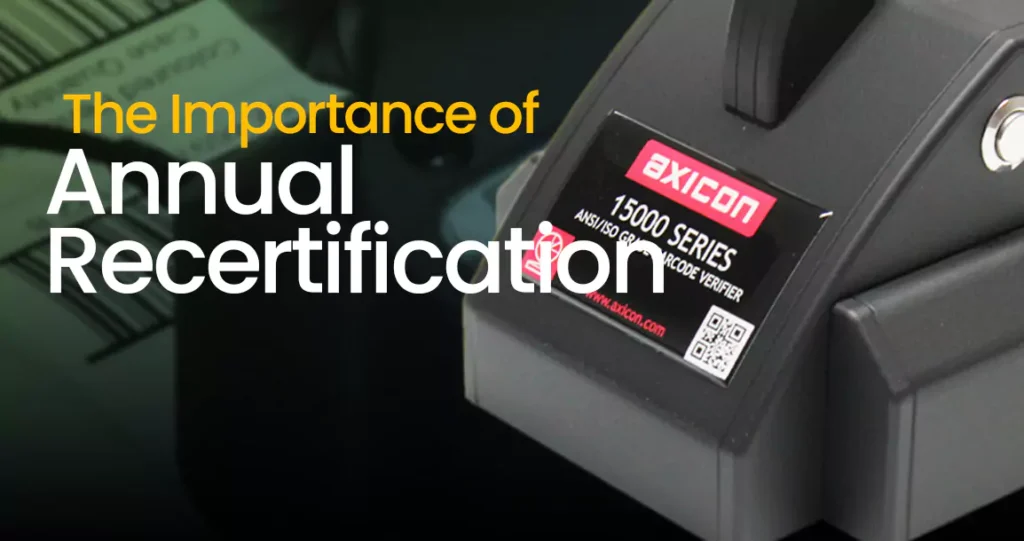
The Importance of Annual Recertification

While Axicon Barcode Verifiers are renowned for their accuracy and reliability, they are not immune to wear and tear. To ensure that your verifier continues to provide accurate results and adhere to ISO standards, annual recertification is imperative.

Benefits of Annual Recertification:
Calibration and Accuracy

Over time, the accuracy of any measuring instrument can drift. Annual recertification involves recalibrating the verifier to ensure it continues to provide accurate grading results. This guarantees that the barcodes you produce meet ISO standards.

Technological Advancements

Barcode verification technology is constantly evolving. Annual recertification allows you to stay up-to-date with the latest advancements and ensures that your verifier remains compliant and effective in an ever-changing market.

Risk Mitigation

Failing to recertify your Axicon Barcode Verifier can lead to an increased risk of producing “a pass” for subpar barcodes. This can result in delayed shipments, unhappy customers, and potentially even financial penalties due to non-compliance with industry standards.

Maximizes ROI

Investing in an Axicon Barcode Verifier is a significant commitment. Annual recertification extends the lifespan of your device and maximizes your return on investment by ensuring consistent, high-quality barcode production.

Potential issues when skipping recertification

Risks of Skipping Recertification

Ignoring recertification can create costly problems for your business:

Decreased Barcode Quality

Without regular recertification, the accuracy and reliability of your verifier may decline, leading to subpar barcode quality and an increased risk of scanning errors. According to Axicon’s user guide, consistent calibration and maintenance are vital for optimal performance.

Compliance Risks

Inaccurate or unreadable barcodes can lead to delayed deliveries and frustrated customers, potentially resulting in lost sales and diminished customer trust. Maintaining verifier accuracy through regular recertification helps prevent such issues.

Customer Dissatisfaction

Inaccurate or unreadable barcodes can lead to delayed deliveries and frustrated customers, potentially resulting in lost sales and diminished customer trust. Maintaining verifier accuracy through regular recertification helps prevent such issues

Increased Costs

The cost of recertification is far outweighed by the potential costs associated with non-compliance, errors, and inefficiencies in your supply chain.

Stay Ahead with ISO Standards and Recertification

For businesses that depend on Axicon Barcode Verifiers, following ISO standards and committing to annual recertification is non-negotiable. It’s the key to maintaining a reliable barcode system, ensuring compliance, and optimizing supply chain efficiency.

Take Action Today:

  • Adhere to ISO standards for high-quality, error-free barcodes.
  • Schedule annual recertification to keep your Axicon Verifier in top shape.
  • Protect your brand reputation, ensure customer satisfaction, and stay ahead in today’s competitive market.

Don’t compromise on barcode quality or supply chain efficiency. Invest in ISO standards and annual recertification for your Axicon Barcode Verifiers today!

For more information contact intermax today button

For expert advice and reliable barcode verification, Intermax is here to help you every step of the way.
Contact us today to ensure your barcodes meet the highest quality standards and keep your operations running smoothly.
Previous Post
A Guide to Acceptable Barcode Color Combinations
Next Post
Barcode Verification in the History of Barcodes