
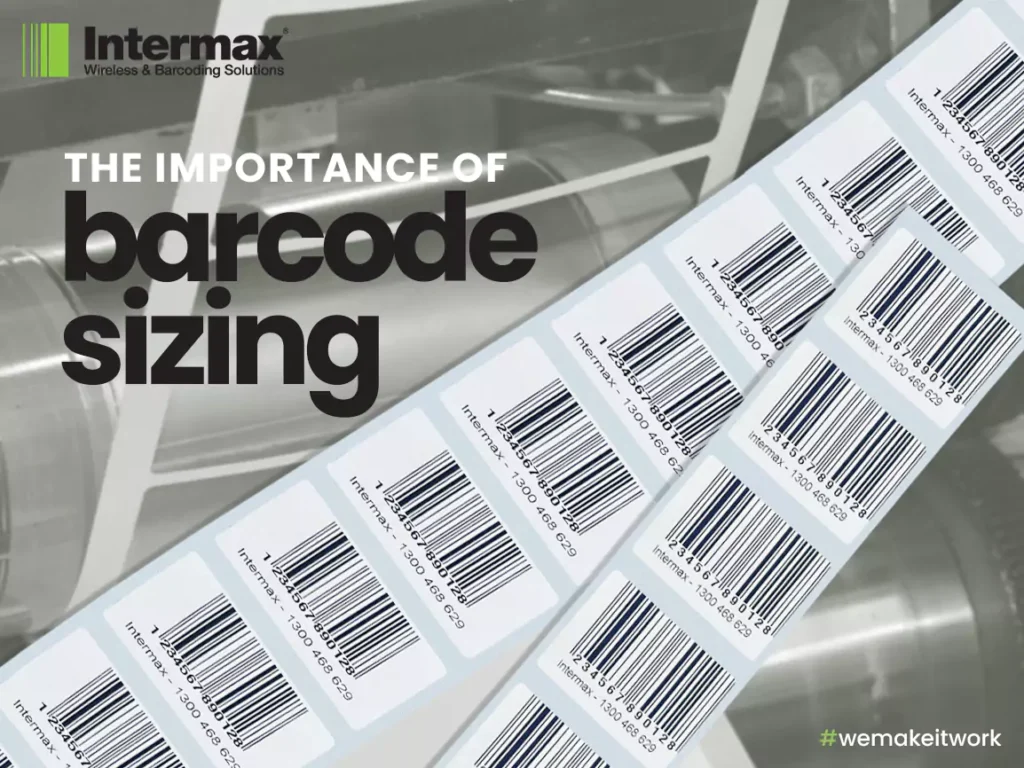
Barcode Size: Is It Really That Important?
So, does size matter? Well, in the case of barcodes—Yes, it does!
When you produce a retail barcode (EAN13), you are restricted to a range of barcode sizes. This is between 80% Magnification to 200% Magnification, but due to the mechanical limitations of barcode printers today, the limitation range is between 77% to 200% Magnification.
Many package designers typically add small-size barcodes, hidden at the corner of the packaging—as they want to highlight product artwork and design over the ugly, black-and-white, stripy thing they have to include.
However, smaller barcodes on packages have a profound effect.
Smaller barcodes not only make the product harder to scan, resulting in longer processes and inconveniences, it also make meeting the required print quality much more difficult.
Remember, barcodes are used to:
- order,
- track,
- stocktake,
- and sell the product;
so it is a very important part of the product’s packaging detail.
Precision in Barcode Sizing – Ensuring Accuracy Every Scan
Here’s an example of the same EAN13 code produced on a 203dpi Thermal Transfer Printer in two sizes. Left: 114% Magnification, Right: 77% Magnification (Minimum Size).
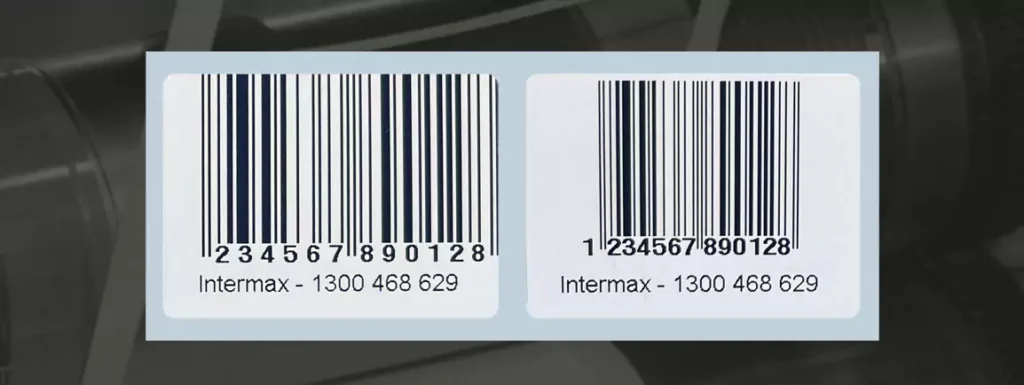
While the smaller code passed quality testing, it only allows 8% tolerance in line size, while the large code allows for 30% line size tolerance, but the label size was too small to allow the required quiet zones—and it failed verification!
The solution was to use a larger label as shown below and print in the larger size and you get a great result.
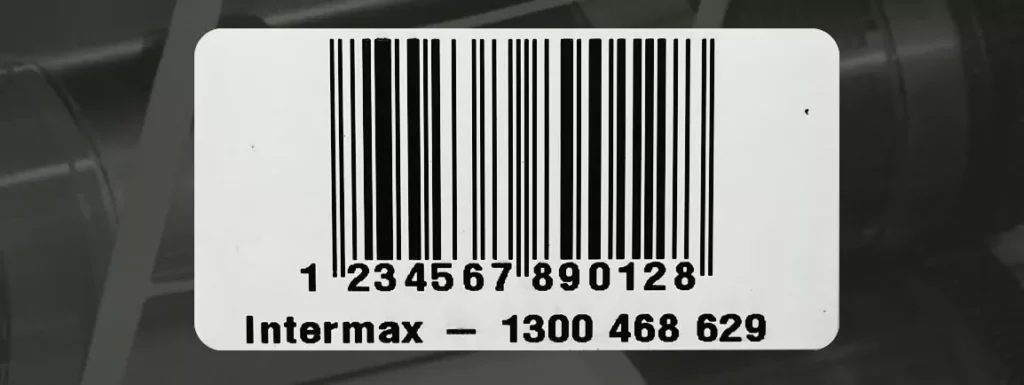
In other terms, if anything goes wrong during printing—a bleed or shrinkage in line thickness or if the code gets scuffed during transit—chances are scanners will fail to read the small code, whereas the large code will remain readable.
Scanning a large code is also easier, even at a greater distance.
Why make life hard for your printers? Always aim to create your labels with >100% magnification—your labels will pass quality tests easily!
At Intermax, we take pride in being part of this technological evolution, offering state-of-the-art barcode solutions for a diverse range of industries across Australia. Our expertise ensures that businesses maintain barcode compliance, optimize scanning performance, and achieve seamless product tracking across your business.