
Understanding Truncation and How to Prevent Barcode Errors
In the world of barcodes, small details can make a big difference. One such detail is truncation, a common issue that can significantly impact barcode readability and lead to costly errors.
But what exactly is truncation, and why does it matter so much? Understanding truncation and its effects on barcode verification is essential for businesses that rely on barcodes for smooth operations.
We’ll explore what truncation is, why it’s a problem, and how to avoid it during barcode verification.
What is Truncation in Barcodes?
Have you ever tried fitting a barcode into a tight space on your packaging?
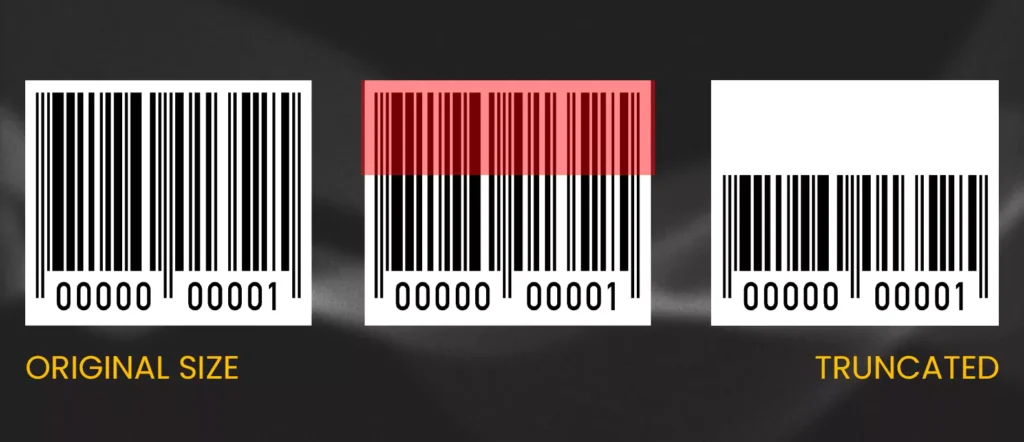
Truncation occurs when the height of a barcode is reduced below the standard specifications, often to fit within specific packaging dimensions or for aesthetic reasons.
While this might seem like a minor adjustment, truncating a barcode can lead to significant readability issues. Truncation alters the vertical integrity of the barcode, making it harder for scanners, especially those using omnidirectional beams, to read the code accurately.
The Impact of Truncation on Barcode Readability




How to Avoid Truncation in Barcode Verification
Wondering how to keep your barcodes compliant and scannable? Here are some practical tips to help you prevent truncation issues during barcode verification:

Truncation is a seemingly small adjustment that can have big consequences for barcode readability and compliance. By understanding the impacts of truncation and taking steps to avoid it, businesses can ensure their barcodes remain scannable and effective across all environments.
Investing in proper barcode verification processes and adhering to industry standards will help protect your business from costly errors and ensure smooth operations.
For expert advice and reliable barcode verification, Intermax is here to help you every step of the way.